What GEO Actually Measures: Why Most AI Visibility Scores Miss the Point
By Greg Arnold
Most GEO (Generative Engine Optimization) scores measure the wrong thing. Citation counts, mention frequency, AI Share of Voice — these are outputs. They tell you what happened after an AI model made its decision. They cannot tell you why the decision went the way it did, or what to change to get a different result.
GeoScored measures structural inputs: the content properties that determine whether AI models can find, parse, extract, and cite a page. The distinction sounds technical. The practical difference is significant.
Why output-based scoring produces misleading results
A brand can rank highly on output-based GEO tools for one of two reasons: its content is structurally strong, or it has accumulated surface-level signals through volume publishing. Output-based tools cannot tell the difference. Both show up as favorable citation counts.
The problem compounds over time. High-volume, low-structure content can inflate citation metrics temporarily. Structural improvements — heading hierarchy, fact density, passage self-containment — produce more durable gains because they align with the documented structural signals AI models use for content evaluation and extraction.
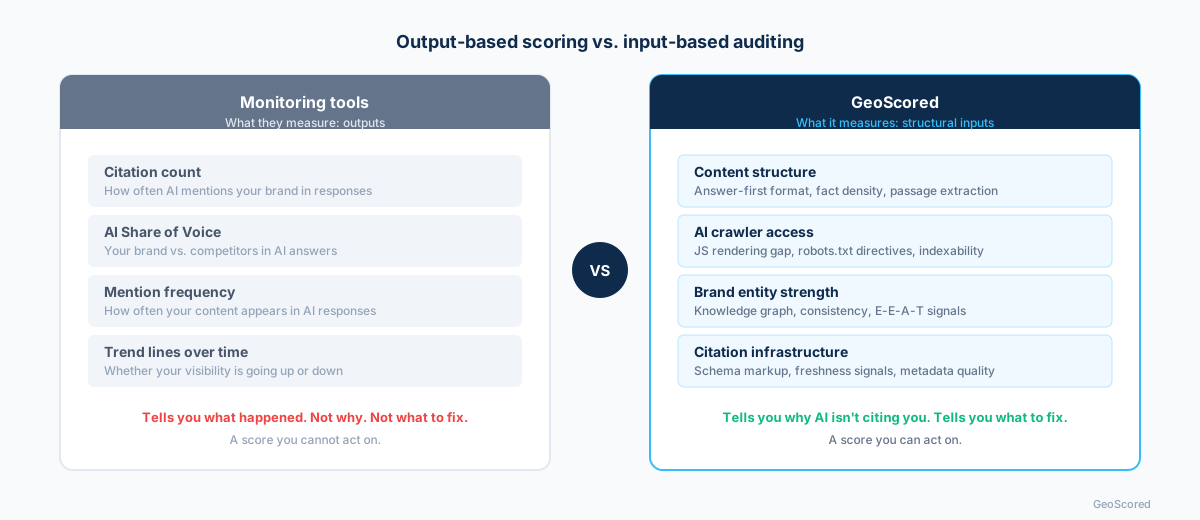
Most tools in this market monitor outputs rather than audit inputs. That distinction matters before you decide which tool to use. A citation count without a structural explanation is a number you cannot act on.
What GeoScored's checks actually evaluate
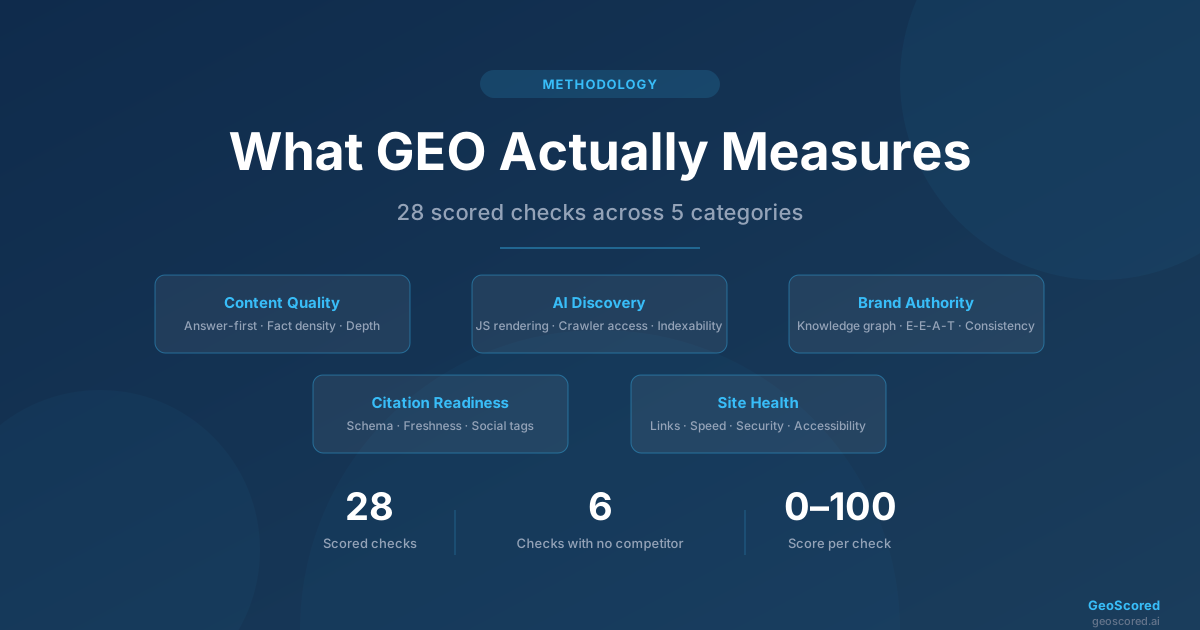
GeoScored runs scored checks across five categories: Content Quality, AI Discovery, Brand Authority, Citation Readiness, and Site Health. Checks are weighted by their impact on AI search visibility. Each check produces a score from 0 to 100. The overall GEO score is the weighted average across all scored checks.
The five categories are not equally weighted. Content Quality carries the highest share of the overall score, reflecting that content structure is the most direct determinant of whether a passage gets selected for AI citation. Technical signals matter, but a technically perfect page with weak content structure will still score poorly.
Content Quality
Content Quality evaluates whether your content is structured for AI extraction. AI models do not read pages the way humans do. They scan for passages that answer a specific question directly, contain verifiable facts, and can stand alone without surrounding context.
The checks in this category evaluate: whether the heading structure follows a valid H1-H2-H3 hierarchy AI models can use to navigate content (Heading Hierarchy), whether each section leads with a direct claim rather than setup language (Answer-First Format), how many verifiable facts the content contains per unit of text (Fact Density), whether paragraphs can be extracted and cited independently (Passage Self-Containment), how cleanly the page's structure is preserved when AI models convert HTML to simplified text formats (Markdown Fidelity), how deep and thorough the content is relative to the topic (Content Depth), and how clear and readable the prose is for both humans and AI systems (Readability).
The most common failure in this category is not a lack of content — it is structure. In retrieval-based AI systems, section openings carry disproportionate weight in passage extraction. Setup language ("In this section, we will explore...") signals low extraction value. Direct, specific, fact-dense openings score well.
AI Discovery
AI Discovery evaluates whether AI crawlers can access and accurately render your content. This is not the same as Google crawlability, and the difference has practical consequences.
Several AI systems convert web pages from HTML to plain text or markdown before processing them. A page that renders cleanly in a browser may lose critical structure during that conversion: heading levels collapse, tables flatten into undifferentiated text, and navigation elements bleed into body content. The JS Rendering Gap check compares what AI crawlers encounter in raw HTML against what a human sees in the rendered page. Large gaps indicate that significant content is effectively invisible to AI models, regardless of how it looks on screen.
This category also evaluates indexability signals (canonical tags, XML sitemap presence), crawler accessibility directives, and whether meaningful content is accessible before JavaScript execution thresholds. A page with strong content that AI crawlers cannot reach or correctly render scores at or near zero in this category regardless of its content quality.
Brand Authority
Brand Authority measures how accurately and confidently AI models can identify and describe your brand as a distinct entity. This is separate from traditional SEO domain authority, and it is calculated differently.
AI engines evaluate brand entity strength through signals most marketing teams have not measured: knowledge graph presence, named expert attribution, consistent descriptions across sources, and coverage from authoritative publications. The Brand Authority category checks for Wikidata entity presence (Knowledge Graph), Experience-Expertise-Authoritativeness-Trustworthiness markers including authorship and organizational identity (E-E-A-T Signals), consistent use of brand name, category, and product descriptions across the brand's web presence (Brand Entity Consistency), and whether related content on the same site links together coherently (Topical Cluster Coherence).
A brand that describes itself differently across LinkedIn, Crunchbase, its own website, and press coverage gives AI models contradictory signals about what it is and what it does. AI systems reduce their confidence in describing that brand accurately. Lower confidence means fewer citations, regardless of how strong the content structure is.
Citation Readiness
Citation Readiness evaluates the structured signals that help AI models correctly attribute your content when they do cite it.
Schema markup in JSON-LD format tells AI systems which entity type your content represents, who authored it, when it was published, and how it relates to other entities on your site. Pages without Article schema — or with schema values that contradict the visible content — reduce citation confidence. Freshness signals matter here too: a page with a dateModified value reflecting recent updates signals active maintenance. A page with no modification date, or one that has not been updated in years, signals stale content regardless of what it actually says.
This category also evaluates Open Graph and Twitter Card metadata (Social Tags), duplicate content signals, and meta description quality. These checks ensure that when an AI model does decide to cite your content, it has the structured context to do so accurately.
Site Health
Site Health evaluates the technical foundation that supports the categories above it. Link health, image optimization, page speed signals, security headers, URL structure, accessibility, and redirect chains are all evaluated here.
This category carries the smallest weight in the overall score. Its role is to establish a floor. Technical problems in Site Health can suppress scores in other categories by preventing crawlers from accessing or correctly rendering content. A page with broken internal links, images that block rendering, or non-secure delivery may never be crawled thoroughly enough for the content checks to produce reliable results.
The checks with no competitive equivalent
Five of GeoScored's scored checks have no equivalent in any GEO or SEO tool we have reviewed: Answer-First Format, Fact Density, Passage Self-Containment, Markdown Fidelity, and JS Rendering Gap. GeoScored also validates llms.txt spec compliance — grading the file's structure and content quality against the llmstxt.org specification, which goes beyond the presence-only checks other tools run.
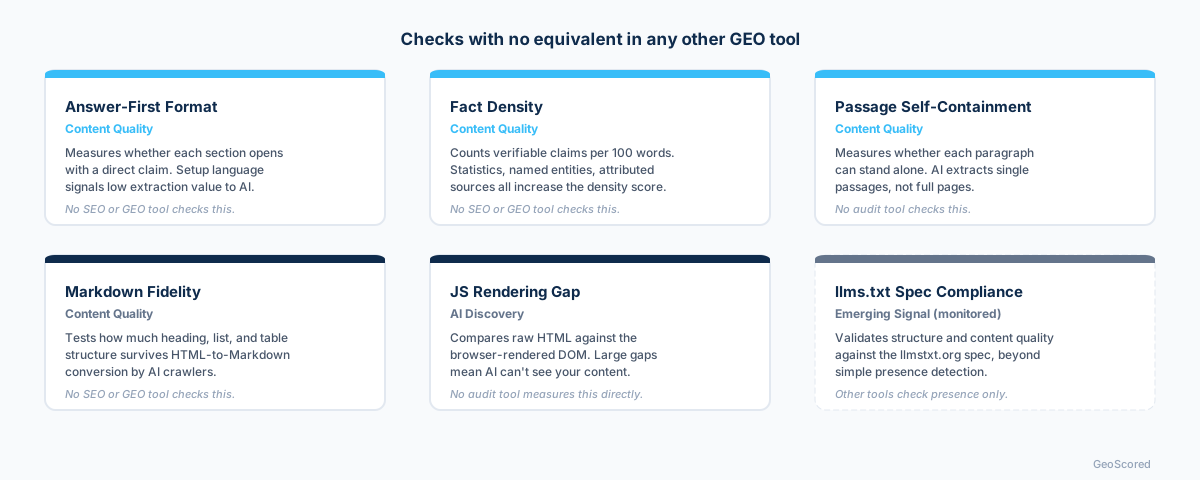
These checks exist because standard GEO tooling was largely built by extending traditional SEO infrastructure. Traditional SEO does not evaluate whether a passage is self-contained enough to be independently citable. It does not test how content structure degrades when AI models convert HTML to their working format. It does not measure the density of verifiable claims per unit of text.
GeoScored was built from first principles against documented AI model behavior. These unique checks address structural properties that no legacy SEO tool was designed to measure, because those properties did not matter until AI-generated answers became the primary interface for information retrieval.
Why methodology transparency is the only credible foundation
An optimization tool with a black-box score creates the same trust problem it claims to solve. If you cannot see what a GEO score measures, you cannot evaluate whether the recommendations are sound. You are trusting a number with no visibility into how it was calculated.
GeoScored's methodology is auditable. Every check maps to a described structural property. Every recommendation specifies what a passing result looks like. GeoScored applies its own scoring rubric to its own content pages. Every blog post and public-facing content page goes through the same full audit before publishing. Pages that fall below 80 get revised before they go live.
This is the only verifiable form of credibility a measurement tool can offer: using the instrument on yourself, publishing the results, and fixing what it finds.
Run a free GeoScored scan at geoscored.ai to see your content quality, AI discovery, and brand authority scores with specific recommendations for each check that needs attention.